

NN 10/2026
VERVROEGDE AFTREDE PROGRAM (VAP)
FASE 2
SLAGGATE OM VAN KENNIS TE NEEM:
Verskeie provinsiale onderwysdepartemente is tans in die proses om fase 2 van die VAP uit te rol. Voordat u dit oorweeg wil ons die volgende onder u aandag bring.
Wat is die oogmerk van die Staat om die VAP in werking te stel?
Die werkgewer se doel is om die koste van die salarisrekening af te bestuur, deur die Staatsdiens as sektor te verklein.
Hierdie benadering is ‘n eensydige implementering van die Staat wat nie met vakbonde onderhandel is nie en daarom staan vakbonde dit ten sterkte tee.
Die grootste risiko van die VAP is u toekomstige verlies aan inkomste.
Die SAOU is ten sterkste teen die VAP gekant! Hierdie standpunt van die SAOU is deel van ‘n mandaat wat deur die Nasionale Uitvoerende Raad (NUR) op 19 Maart 2026 gegee is.
Die redes hiervoor is:
- Hierdie program laat lede in ‘n swakker finansiële posisie, veral diegene tussen 55 en 59 jaar wat geen addisionele diensjare bykry nie;
- Die Suid-Afrikaanse Onderwysstelsel verloor broodnodige kapasiteit, kundigheid en institusionele geheue; en
- Die SAOU se kollektiewe onderhandelingsposisies word verswak vanweë die afname in ledegetalle.
1. DIE VAP LAAT LEDE IN ‘N SWAKKER FINANSIËLE POSISIE
Die program klink baie idillies, maar het baie slaggate. Uiteindelik laat dit lede oor die langtermyn in ‘n swakker finansiële posisie, aangesien geen addisionele diensjare tot u berekening gevoeg word nie. Die SAOU het ‘n plig teenoor ons lede om te verseker dat u regte beskerm word en dat u ‘n ingeligte besluit neem.
Hier is ‘n paar feite vir oorweging:
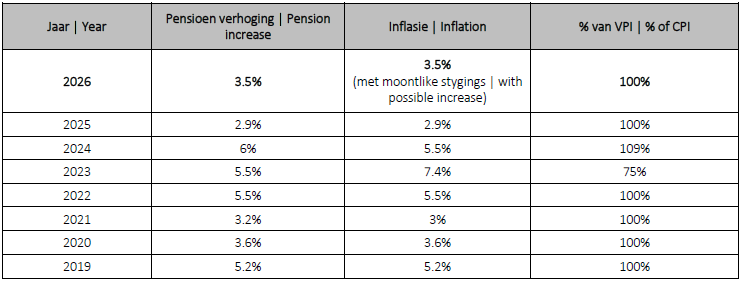
Pensioenverhogings is nie gewaarborg om met inflasie-verhogings tred te hou nie.
- Die GEPF bepaal jaarliks wat die pensioenverhoging sal wees. Dit is gebaseer op die Verbruikersprysindeks (VPI) as basis; en
- Die wet bepaal dat pensioenverhogings met nie minder nie as 75% van die VPI behoort te eskaleer, met die hoofoogmerk om die solvensie van die GEPF te beskerm.
Wat is die implikasies van vervroegde pensioen?
VPI word gebruik as bepalende faktor vir pensioenverhoging, maar u koopkrag is onder druk aangesien die inflasie van onder andere brandstof, mediese koste, elektrisiteit en water en lewenskoste aansienlik hoër as VPI is.
Indien u op 55 aftree:
- Die gemiddelde lewensverwagting is 67 jaar maar kan strek tot 80. Dit beteken dat u huidige pensioen vir u selfversorgend moet wees vir die volgende 25 jaar.
- Belangrik om te onthou: Hoe vroeër u aftree, hoe groter word die finansiële druk om met die stygende lewenskoste tred te hou.
U verbeur alle verdere salarisaanpassings en verhogings van die Staatsdiens
Belangrik om te onthou is dat u nie aftree met die voordele wat u op 65 sou ontvang het nie!
U pensioen word onder andere bereken op u gemiddelde bruto maandelikse inkomste van die laaste 24 maande van u dienstydperk.
Onthou dat die reeds onderhandelde kollektiewe ooreenkoms vir ‘n 4% tot 6% salarisververhoging vir 2026 en 2027 reeds in plek is.
- Staatdienswerkers se pensioenbasis word hiermee verhoog wat vir u ‘n hoër pensioen tot gevolg het.
- Addisionele voordele wat staatsdienswerkers kry:
- QMS;
- Verhogings in behuisingstoelaes; en
- Verhogings in mediese fonds subsidies.
Wat is nodig om te verreken wanneer die VAP oorweeg word?
- Wanneer u aansoek ingedien is, is dit nie moontlik om u aansoek terug te trek nie, aangesien u van besluit verander nie.
- Indien u na aftrede weer in ‘n BL-pos aangestel word, neem die netto belastingimplikasie in ag weens die addisionele inkomste verdien.
- U pensioenberekening word gekoppel aan aaneenlopende diensjare. U verloor hierdie voordeel.
- Neem die netto belastingimplikasie van die finansiële voordeel in ag, wat as lokaas dien om aansoek te doen vir die VAP.
2. DIE Verlies aan broodnodige vaardighede, kennis en kundigheid
Persone bo 55, is veral die groepering wat oor ryke kennis, ervaring en oor waardevolle institusionele geheue beskik. Die onderwysstelsel kan nie bekostig om u kundigheid en ervaring op ‘n kritieke stadium van u loopbaan te verloor nie.
3. DIE SAOU SE KOLLEKTIEWE ONDERHANDELING POSISIE WORD VERSWAK VANWEË DIE VERMINDERDE GETALLE
Die VAP bring mee dat die SAOU se kollektiewe onderhandelingsposisie negatief geraak word, aangesien die SAOU se bedingingsmag in die onderhandelingskamers gebaseer is op die getal PERSAL-lede.
4. WAT STAAN U TE DOEN?
- Dit is van absolute belang om ’n omvattende finansiële ontleding van u posisie te doen.
- Neem die volgende in ag:
- U moontlike lewensverwagting;
- Inflasieverwagting;
- Stygende mediese koste; en
- Deurlopende verhoging van lewenskoste.
5. DIE SAOU STAAN GEREED OM U TE LEI IN U BESLUIT
Die periode van aansoek is vanaf 1 April 2026 tot 30 Junie 2026. Indien u oorweeg om aansoek te doen vir die VAP, kontak u plaaslike distrikskantoor vir verdere inligting.
2026/04/16
EARLY RETIREMENT PROGRAMME (ERP)
PHASE 2
PITFALLS TO TAKE
NOTE OF:
Various provincial education departments are currently in the process of rolling out phase 2 of the ERP. Before you consider it, we would like to bring the following to your attention.
What is the objective of the State in implementing the ERP?
The employer's goal is to lower the cost of the salary bill, by downsizing the Public Service as a sector.
This is a one-sided implementation by Government which was not negotiated with unions and therefore unions cannot support these programmes
The biggest risk of the ERP is your future loss of income.
The SAOU is strongly opposed to the ERP! This position of the SAOU is part of a mandate given by the National Executive Council (NEC) on 19 March 2026.
The reasons for this are:
- This program leaves members in a weaker financial position, especially those between the ages of 55 and 59 who do not receive any additional years of service;
- The South African Education System is losing much-needed capacity, expertise and institutional memory; and
- The SAOU's collective bargaining positions are weakened because of the reduced member numbers.
1. THE ERP LEAVES MEMBERS IN A WEAKER FINANCIAL POSITION
The programme sounds very idyllic, but has a lot of pitfalls. Ultimately, this leaves members in a weaker financial position over the long term, as no additional years of service are added to your calculation. The SAOU has a duty to our members to ensure that your rights are protected and that you make an informed decision.
Here are some facts for consideration:
Pension increases are not guaranteed to keep up with inflation increases.
- The GEPF determines annually what the pension increase will be. It is based on the Consumer Price Index (CPI) as basis; and
- The law stipulates that pension increases should escalate by not less than 75% of the CPI, with the main objective to protect the solvency of the GEPF.
What are the implications of early retirement?
CPI is used as a determinant for pension increase, but your purchasing power is under pressure as the inflation of fuel, medical costs, electricity and water, and living costs, among others, is significantly higher than CPI.
If you retire at 55:
- The average life expectancy is 67 years but can extend up to 80. This means that your current pension must be self-sufficient for you for the next 25 years.
- Important to remember: The earlier you retire, the greater the financial pressure to keep up with the rising cost of living.
You forfeit all further salary adjustments and increases of the Public Service
Very important to remember is that you are thus not retiring with the benefits you would have received at 65!
Your pension is based on your average gross monthly income of the last 24 months of your period of service, among other things.
Remember that the already negotiated collective agreement for a 4% to 6% salary increase for 2026 and 2027, is already in place.
- Public service workers' pension base is thereby increased, resulting in a higher pension.
- Additional benefits that public service workers get:
- QMS;
- Increases in housing grants; and
- Increases in medical aid subsidies.
What must be taken into account when considering the ERP?
- Once your application has been submitted, it is not possible to withdraw the application as you changed your mind.
- If you are reappointed to a SGB position after retirement, take into account the net tax implication due the additional income you earn.
- Your pension calculation is linked to years of continuous service. You lose this advantage.
- Consider the net tax implication of the financial benefit, which serves as bait to apply for the ERP.
2. THE LOSS OF MUCH-NEEDED SKILLS, KNOWLEDGE AND EXPERTISE
Persons over 55, in particular, are the grouping that possesses rich knowledge, experience and valuable institutional memory. The education system cannot afford to lose your expertise and experience at a critical stage of your career.
3. THE SAOU'S COLLECTIVE BARGAINING POSITION IS WEAKENED BECAUSE OF THE REDUCED NUMBERS
The ERP will negatively affect the SAOU's collective bargaining position, as the SAOU's bargaining power in the negotiating chambers is based on the number of PERSAL members.
4. WHAT DO YOU HAVE TO DO?
- It is of absolute importance to conduct a comprehensive financial analysis of your position.
- Consider the following:
- Your potential life expectancy;
- Inflation expectation;
- Rising medical costs; and
- Continuous increase in the cost of living.
5. THE SAOU STANDS READY TO GUIDE YOU IN YOUR DECISION
If you are considering applying for the ERP, contact your local district office for further information.